
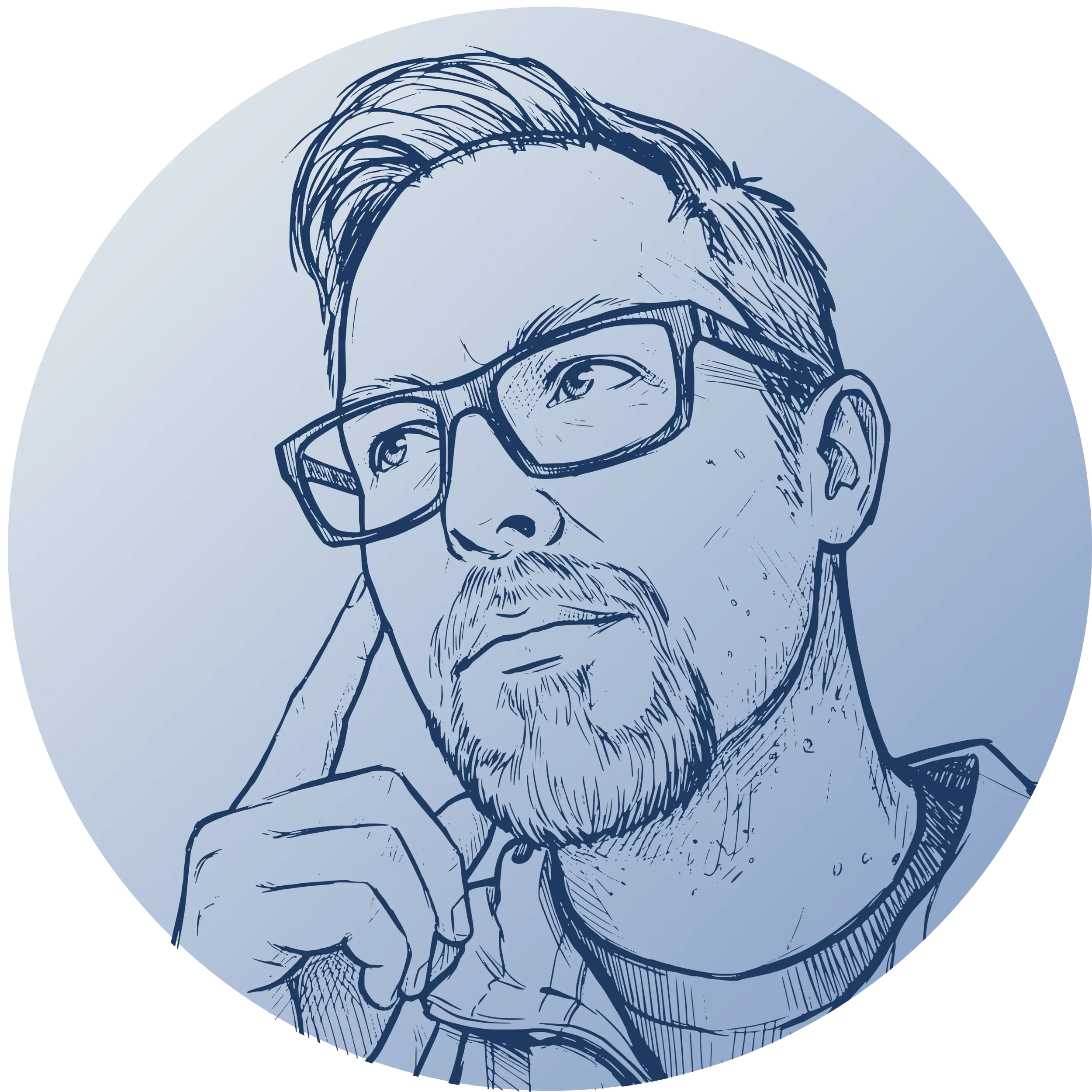
Twenty Years of Asking "Why"
Two decades applying human-centered design. This is the career and what I've learned along the way.
// SUMMARY
Who’s Thomas
I've always been fascinated by the gap between the benefits technology can offer and the consequences it can have when implemented poorly. These consequences usually come from misunderstanding who the users are and what they need. For over twenty years I’ve worked to close this gap, and I’ve developed sharp instincts for when teams are toward headed for expensive, potentially catastrophic, mistakes.
My Journey
I started my career with an internship at Microsoft, conducting usability studies of Windows and desktop applications. I then became one of two usability specialists at a large software company, helping integrate usability into its product development lifecycle. From there, I moved into human factors work for defense and federal systems. Over that time, I've led multidisciplinary teams across high-complexity industries, including health, utilities, military command-and-control, consumer protection, and federal system modernization.
My Takeaway
I've held many titles over my career: Usability Analyst, Human Factors Engineer, UX Researcher, UX Designer, and Creative Director. Across all of these roles and industries, I've consistently seen that the problems worth solving are rarely the ones that seem obvious at first. My best work isn't just conducting research or creating designs. It's helping teams recognize when they're about to build the wrong thing, correct course, and create something with real impact.
// STRENGTHS
Helping teams resist premature certainty.
Many organizations look to UX professionals to ‘execute’ on decisions they've already made. That's fine for some projects. I'm most valuable though when I help teams step back and ask whether they're solving the right problem in the first place.
Framing Decisions
I don't do this by saying "no" to stakeholders or by being difficult. I do it by framing conversations around risk, resources, and opportunities. That means showing teams that turning assumptions into hypotheses, and testing them up front, is the fastest path to a solution that works.
I work within Agile frameworks, but I push back when speed threatens to bypass understanding. I lead cross-functional teams through ambiguity by creating the conditions good decisions need: clear problem framing, shared understanding, and the right level of evidence at the right time
Leading & Contributing
Good decision framing doesn't scale if it only happens through me. I've managed multidisciplinary teams, shaped product strategy across complex industries, and mentored dozens of practitioners, from junior to senior level. Mentoring lets me teach others why framing decisions matters and how to do it before a team commits to a solution.
I've led teams for over a decade while staying hands-on in research and design. Credibility with a team comes from doing the work alongside them, not just directing it. That's also where the best mentoring happens.
// CREDENTIALS + EXPERIENCE
Academic Foundation. Sharpened Through Practice.
I have an MS in Human Factors Psychology, and that training grounds everything I do. But it's 20+ years of applying it across contexts that lets me navigate complexity and deliver meaningful impact.

What Experience Has Taught Me
This is where the sharpening happened. Three environments, three different sets of constraints, three different sets of lessons about applying human-centered design.
Federal & Regulated Industries
I've spent over a decade working with federal agencies (Department of Defense, U.S. Coast Guard, Department of State, Consumer Product Safety Commission) and regulated industries (energy, federal acquisitions, pharmaceutical marketing).
What I Learned
How to navigate complex compliance requirements (Section 508, WCAG, HIPAA, FAR)
How to modernize deeply ingrained processes inside large bureaucracies
How to balance user needs with regulatory mandates
How to build trust with skeptical stakeholders who've seen too many consultants promise transformation
High-Stakes Environments
I've designed for command-and-control systems, emergency response coordination, port security operations, and EMT working in ambulances. These are contexts where bad design has real, immediate consequences.
What I Learned
How to conduct research in complex, highly dynamic environments
The difference between what people say they need and what works under pressure
How to design for cognitive load in high-stress situations
Why edge cases aren't edge cases when lives are on the line
Why clarity and simplicity matter most when users are stressed or scared
Commercial Products & Cloud Platforms
I've worked product teams at Microsoft, ESRI, LexisNexis, and other fast-moving companies building enterprise software and cloud-based SaaS platforms.
What I Learned
How to balance speed and rigor so research informs decisions without slowing down shipping
How to design for scale and diverse user populations
The art of continuous iteration based on real usage data
How to make research findings actionable for engineering teams with tight deadlines
// CONNECT WITH ME
Let’s Talk About Your Project.
Need of UX research, product design, or strategic leadership? I'd love to hear from you.