

THOMAS ATEN
Research-driven design for complex, high-stakes systems.
M.S.
20+
Years Of ExperienceIn Human Factors PsychologyU.S. Security Clearance10+
Years in LeadershipActive
I don't just design interfaces. I design against how systems
fail when people are under pressure, distracted, or working
around bad design.
My background in Human Factors psychology means I surface hidden assumptions early, stress-test them with real users, and help teams avoid building the wrong thing before it becomes an expensive mistake. The through-line across my work isn't an industry — it's a problem type.
Software publishers. Critical environments.
Two decades spanning commercial software and the most consequence-heavy domains in the public and private sector.
COMMERCIAL SOFTWARE

Integrating HCD into fast-paced publishers
MicrosoftESRILexisNexisEmbedding human-centered design methods into product teams, rapid usability testing and iterative design.
REGULATED / HIGH-STAKES DOMAINS

Where errors carry high consequences
Health CareDefenseFederalEnergy / UtilitiesPort security, emergency response, IT procurement modernization, regulated commercial products.

Research-Driven Design for Complex, High-Stakes Systems
I design complex workflow systems for regulated, high-consequence environments — where a bad interface isn't just frustrating, it's a liability.
I’m grounded in Human Factors rigor and over 20 years of embedded research and design experience. The through-line across my work isn't an industry — it's a problem type. Multi-step, multi-stakeholder, compliance-constrained systems where the design directly determines whether users succeed or fail.
Some of Where My Work has Lived
A small sampling of organizations I have supported








Designing Against Failure
What twenty years in regulated, high-stakes environments taught me — and why it transfers.
Designing Inside Constraints
Compliance isn't a checkbox at the end. It shapes the problem. I’ve learned to design with the constraints, not around them.
Compliance frameworks (Section 508, WCAG, HIPAA, FAR) are design inputs, not afterthoughts.
Skeptical stakeholders are skeptical for a reason — earn trust through evidence, not pitches.
User needs and regulatory mandates only look like a trade-off when one side isn't understood deeply enough.
Modernizing entrenched processes requires respecting why they got entrenched in the first place.
Designing for When it Counts
Emergency response coordination, port security operations, EMTs in ambulances — environments where bad design has immediate consequences.
Research belongs where the work happens — ambulances, control rooms, in the field.
What people say they need and what works under pressure are rarely the same thing.
Edge cases stop being edge cases when consequences are high.
Clarity and simplicity matter most when users have the least bandwidth.
WHY THIS BACKGROUND TRAVELS
The shared DNA across federal, defense, and public safety — complex workflows, high cognitive load, zero tolerance for error — is the same DNA showing up in healthcare, fintech, and cybersecurity. The context is different. The design problems are not.
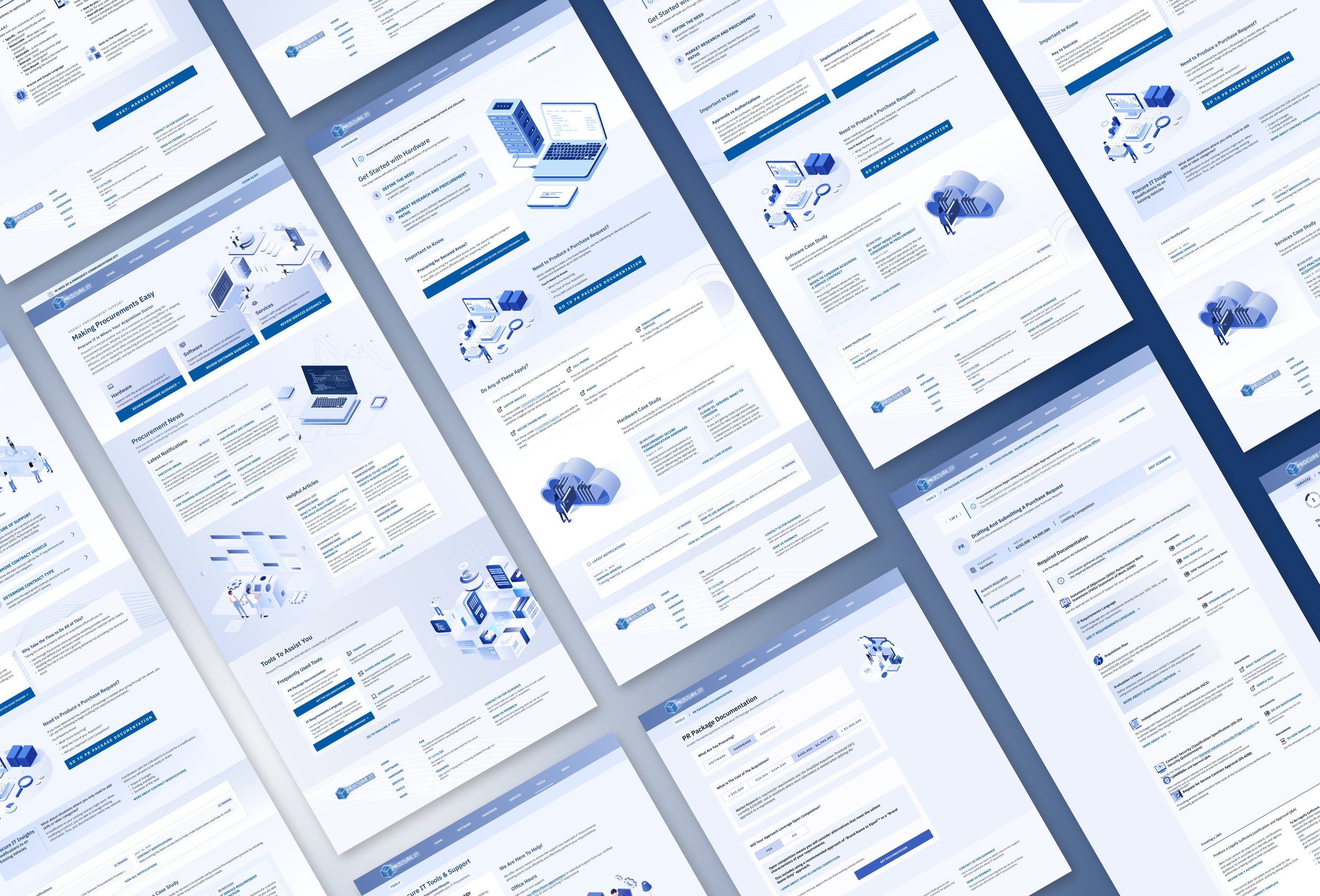
Example of Work

Federal IT Procurement: Research-Driven Phased Modernization
Role: UX Lead | Creative Director
CHALLENGE
A federal agency needed to improve IT procurement before their next fiscal year-end surge. Leadership had a long-term vision—a TurboTax-style guided interface—but faced immediate constraints: limited budget, tight timeline, and uncertainty about where to start or what would move the needle in the near term.
RESULT
I conducted user research which revealed underlying problems: use of outdated templates and inconsistent guidance around complex policy. I then designed a knowledge resource delivered in months instead of years. The impact: COs now direct staff to the site, reducing their own workload and ensuring consistent guidance in the application of policy is obtained. Usage spikes during acquisition surges prove its become a reliable, authoritative, resource staff continue to use. Two years on, we're still iteratively building off the MVP—to include exploring AI integration that will be more effective than the originally envisioned solution.

CREDENTIALS
Formal Training. Real-World Application.
I have an MS in Human Factors Psychology from Clemson University. That formal training grounds everything I do—but it's the 20+ years of applying it across contexts that allows me to navigate complexity and deliver results.
I've led UX teams for over a decade while remaining hands-on in research and design. I've managed multidisciplinary teams, shaped product strategy for complex systems, and mentored dozens of practitioners. I'm both a strategic leader and a working practitioner—I don't just direct the work, I do it.